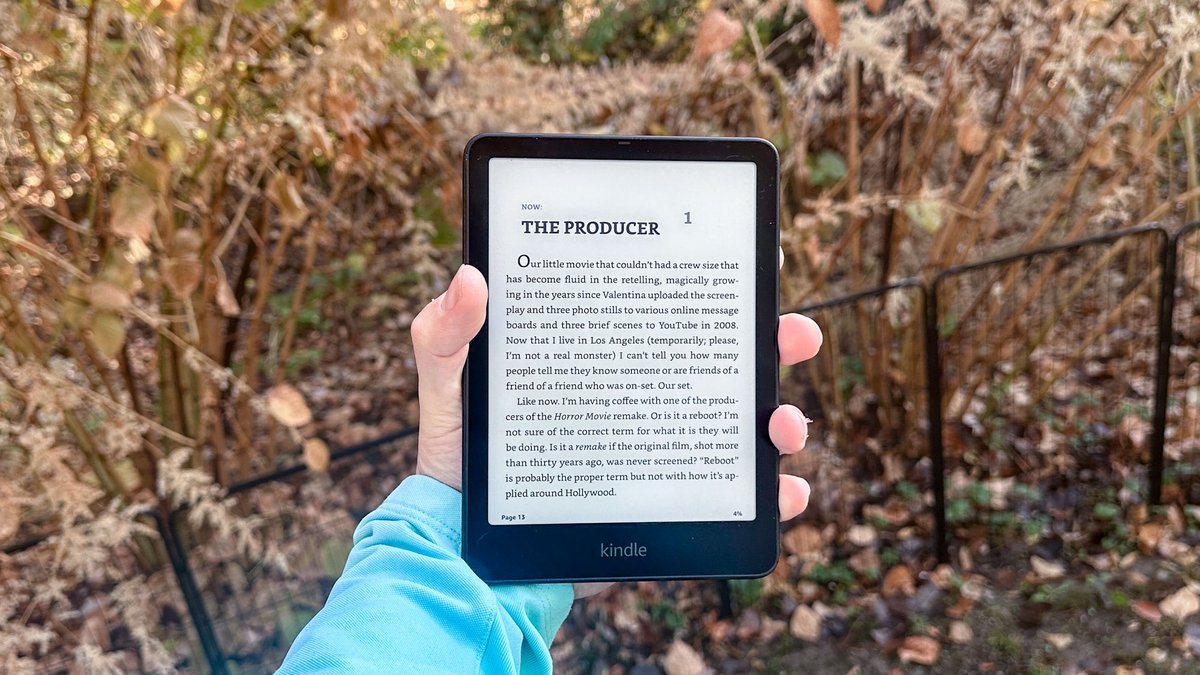
The way we consume stories and information has transformed dramatically, presenting a fascinating dilemma for modern readers. When weighing the options in the great debate of "Kindle vs. Alternatives: E-readers, Tablets & Physical Books," you're not just choosing a format; you're shaping your entire reading experience. Is it the comforting heft of a physical book, the sleek convenience of an e-reader, or the versatile power of a tablet that truly best serves your literary journey? Let's dive deep into what each offers, and perhaps more importantly, what they demand from you.
At a Glance: Your Reading Format Choices
- Physical Books: Unmatched tactile experience, excellent for deep reading and memory retention, zero digital distractions, strong ownership, and resale value. Best for cherished reads, serious study, or sharing.
- E-readers (e.g., Kindle, Kobo): Supreme portability for thousands of books, instant acquisition, weeks of battery life, eye-friendly e-ink screens, and powerful built-in study tools. Ideal for travelers, commuters, or avid readers on a budget.
- Tablets (e.g., iPad, Amazon Fire): Multi-purpose devices for reading, browsing, streaming, and productivity. Offer color screens, app versatility, but come with more distractions and are less ideal for extended reading due to screen type. Best for those who want one device for everything.
- No Single "Best": The optimal choice often involves a hybrid approach, leveraging each format's strengths depending on the situation, content, or personal preference.
The Enduring Allure of the Printed Page: Physical Books
Before the digital age, physical books were the undisputed champions of storytelling, and for many, they still are. There's a profound, almost primal connection we have with printed matter that digital formats simply haven't replicated.
A Sensory Journey and Cognitive Edge
Holding a physical book is a multi-sensory experience. The scent of paper, the subtle rustle of turning pages, the evolving weight in your hands as you progress—these tactile cues aren't just pleasant, they actively aid comprehension and memory. Your brain constructs a mental map of the text, making it easier to recall specific information or the chronological order of events, especially with long or complex material. You know exactly how much you've read by the visible thickness of the left-hand stack of pages, offering a tangible sense of accomplishment.
Physical books truly shine in bright sunlight, offering unmatched readability without glare. Of course, when the lights dim, you'll need an external lamp, a classic and often comforting ritual in itself.
True Ownership, Lasting Value, and Pure Focus
One of the most significant advantages of physical books lies in true ownership. When you buy a book, it's yours. It's a durable, independent object, free from Digital Rights Management (DRM), platform dependencies, or license agreements. This means you can lend it, gift it, sell it in a thriving secondhand market, or pass it down through generations, retaining its stable resale value. For budget-conscious readers, used bookstores and sales offer exceptional value, making a vast library accessible.
Perhaps most critically in our hyper-connected world, a physical book is a single-purpose object. It doesn't ping with notifications, tempt you with emails, or draw you into endless social media scrolls. It demands your full attention, fostering a level of deep reading and focus that's increasingly rare. Beyond functionality, books are also aesthetic objects. A well-curated physical collection reflects personal tastes, offers joy in design, and makes for a thoughtful, tangible gift.
The Digital Frontier: E-readers, Led by Kindle
Amazon's Kindle spearheaded the e-reader revolution, bringing the concept of a portable digital library to the mainstream. These dedicated devices offer a compelling counter-argument to the traditional book, prioritizing convenience and access above all else.
Unparalleled Convenience and Access
Imagine carrying thousands of books—an entire library—in a device lighter than a single hardcover. That's the core appeal of e-readers. They're ideal for travelers, commuters, or anyone who wants immediate access to a vast array of reading material. You can switch between books instantly, ensuring you always have something new to read.
Beyond portability, e-readers offer instant gratification. A new book can be found, purchased, and downloaded in seconds, wherever you have an internet connection. This unparalleled access extends to niche, out-of-print, or international titles that might be hard to find physically. Many e-readers also integrate seamlessly with public library systems, allowing you to borrow ebooks for free.
Eye-Friendly Screens and Powerful Study Tools
Unlike tablets, dedicated e-readers feature e-ink screens designed to mimic the appearance of printed paper. This technology significantly reduces eye strain, making long reading sessions more comfortable. Most modern e-readers also include an adjustable front-light (not a backlight, which shines into your eyes), allowing for comfortable low-light reading without direct eye glare.
Battery life on e-readers is measured in weeks, not hours, meaning you can often travel without needing a charger. The digital format also eliminates physical clutter, supporting a minimalist lifestyle by housing countless books without occupying a single shelf. While the initial device investment is there, lower ebook prices, frequent discounts, and subscription services can make e-readers cost-effective for avid readers in the long run.
For students and professionals, e-readers offer digital study tools that physical books simply can't match:
- Search Function: Instantly locate any term or phrase within your book or across your entire library.
- Instant Dictionary: Tap a word to get its definition without interrupting your flow.
- Highlighting & Notes: Easily highlight passages and add notes, with the ability to export these annotations into an organized document for synthesis and review.
The Trade-offs of Digital Reading
Despite their advantages, e-readers aren't without their challenges. The uniform digital progress bar lacks the spatial cues of physical pages, which can sometimes make recalling information location more difficult. You rely on digital bookmarks and tables of contents for navigation, rather than your innate spatial memory.
Perhaps the biggest hurdle for many is the nature of digital ownership. When you "buy" an ebook, you're typically purchasing a license, not the file itself, protected by DRM. This means your library is often tied to a specific platform (like Amazon's Kindle ecosystem). There's a risk of non-transferability between devices or platforms, and in rare cases, access could be revoked if a platform ceases operation or changes its terms. You might be wondering, Is a Kindle worth it? given these ownership nuances? The answer often depends on how much you value convenience over absolute digital freedom.
As consumer electronics, e-readers are also vulnerable to physical damage like screen cracks, battery degradation over time, and software glitches. They have a lifespan, unlike a well-cared-for physical book, posing a long-term risk to library accessibility. And, being electronic devices, they inherently carry the potential for distraction, even if dedicated e-readers are less prone to it than tablets. Strategies like airplane mode or "do not disturb" features are often needed to maintain focus.
Beyond Kindle: Navigating the E-reader & Tablet Landscape
While Kindle might be the most recognized name, Amazon's ecosystem isn't the only game in town. A vibrant industry offers a range of e-readers and multi-purpose tablets, each with unique strengths and weaknesses. Understanding these alternatives is crucial to finding your perfect reading companion.
Key Decision Points When Choosing an E-reader or Tablet Alternative
Before you jump into specific models, consider these vital factors:
- Display Size and Type:
- Portability vs. Immersion: E-readers typically range from 6-inch screens (perfect for one-handed reading on the go) to larger 10-inch displays (great for comics, textbooks, or note-taking). Tablets push even further, with expansive 11-inch or 13-inch screens that are fantastic for general productivity and streaming, but less pocket-friendly.
- E-ink vs. LCD/LED: Dedicated e-readers use e-ink, which mimics paper, is easy on the eyes, and works well in sunlight. Tablets use LCD or LED screens, offering vibrant colors and fast refresh rates, but can cause eye strain during long reading sessions and struggle with glare in bright conditions. Color e-ink is emerging as a middle ground for graphic novels or educational materials.
- Budget:
- You'll find options from budget-friendly tablets around $60 (like the Amazon Fire 7) to premium tablets soaring past $500 (like an iPad Air). Dedicated e-readers generally fall in the $100-$300 range. Your choice here depends heavily on whether you need a single-purpose reading device or a multi-functional gadget.
- E-book Store Access and File Formats:
- Kindle's Ecosystem: Kindle books primarily use Amazon's proprietary AZW, MOBI, or KFX formats, often protected by DRM. This means non-Amazon dedicated e-readers typically cannot directly access the Kindle Store. If you have a large Kindle library, you'll either need to stick with a Kindle device, use the Kindle app on a tablet (Android/Apple/Fire), or go through the often cumbersome process of converting files and removing DRM on a computer.
- Wider Compatibility: Many alternative e-readers, particularly those from Kobo or Boox, offer broader support for standard formats like EPUB and PDF, and often integrate with public library systems (OverDrive/Libby) more easily without platform lock-in.
- Essential Features:
- Color Display: If graphic novels, comics, or illustrated books are a priority, a color e-ink screen or a tablet's vibrant LCD/LED display is essential.
- Stylus Support: For students, artists, or anyone who loves to annotate, dedicated note-taking e-readers (like the Kobo Elipsa 2E) or tablets with stylus support (e.g., Apple Pencil for iPad) are game-changers.
- Gyroscope: Left-handed readers, or those who frequently switch reading orientations, will appreciate devices with a gyroscope for automatic screen rotation.
- Storage and Connectivity: Consider how much internal storage you need (especially for audiobooks or large PDFs) and if expandable storage (microSD) is important. USB-C is now standard for faster charging and data transfer.
Top Contenders: A Look at Leading Alternatives
Let's explore some of the best alternatives to the classic Kindle, spanning the spectrum from dedicated e-readers to versatile tablets.
1. Kobo Clara Colour: Best Overall Dedicated E-reader Alternative
- What it is: A compact, 6-inch color e-ink display e-reader designed for excellent portability.
- Why it shines: It's user-repairable and built with durable plastic, making it a robust travel companion. The display is remarkably clear and sharp, with extensive customization options for fonts and dark mode. Battery life stretches for weeks, and it uses modern USB-C charging. It offers a great balance between portability and features, especially for those looking to dip their toes into color e-ink without breaking the bank.
- Considerations: Its 16GB of storage might feel limiting if you plan to load up on large color PDFs or audiobooks. You won't get direct Kindle Store access; you'll need to transfer books via USB-C or use Kobo's own well-stocked store.
- Price: From around $160.
2. Kobo Clara BW: Best Black & White E-reader Runner-Up
- What it is: The black-and-white counterpart to the Clara Colour, offering a similar compact design.
- Why it shines: It boasts the same portable size, weeks-long battery life, and clear display as its color sibling, but at a slightly lower price point. If color isn't a priority for your reading material, this is an excellent, reliable choice.
- Considerations: The $20 price difference compared to the Clara Colour might make the color version a more compelling upgrade for many, especially given the Clara Colour's slightly better processing power.
- Price: Around $140.
3. Amazon Fire 7 (2022): Best Budget Tablet for Kindle Books
- What it is: A highly affordable 7-inch tablet that runs Amazon's Fire OS.
- Why it shines: For its sub-$100 price, it’s an unbeatable option for reading Kindle books, browsing the web, or light streaming. Its colorful display is decent, and it supports a wide range of formats including Kindle's native AZW/KFX, EPUB, PDF, and TXT. Storage is expandable via microSD up to 1TB, a huge plus for media hoarders. It also retains a 3.5mm headphone jack.
- Considerations: This is not an e-ink device, so expect eye strain during long reading sessions compared to dedicated e-readers. The processor is sluggish, and its 10-hour battery life is average for a tablet, but its 5W charging is very slow (over 4 hours for a full charge). Fire OS means no direct Google Play Store access, though alternative app installation is possible.
- Price: Often as low as $60.
4. Boox Go Color 7: Best Big Kindle Alternative for Comics & PDFs
- What it is: A 7-inch ePaper screen device offering a larger, gorgeous color display.
- Why it shines: Ideal for comics, graphic novels, and color-rich PDFs, its ePaper screen has a comfortable pale yellow hue that's easy on the eyes. It supports over 20 file types out of the box (PDF, EPUB, MOBI, TXT), and crucially, offers full Android support, meaning you can run most Android apps (though ePaper refresh rates limit some). Its proprietary Neo Reader app is feature-rich with dictionary, notebook, and specialized reading modes. It comes with a generous 64GB of storage and a gyroscope for flexible screen orientation.
- Considerations: While it can read owned Kindle books, you'll need to purchase them on a PC and transfer them, as it doesn't offer direct Kindle Store access. The Android experience on an e-ink screen can be slightly slower than a traditional tablet.
- Price: Around $250.
5. Kobo Elipsa 2E: Best Note-Taking E-reader Alternative
- What it is: A bright, clear 10.3-inch e-ink display e-reader designed with note-takers in mind.
- Why it shines: If you're looking to annotate, sketch, or just take copious notes directly on your books and documents, the Elipsa 2E is a fantastic choice. It includes a stylus, offering a natural pen-on-paper feel for in-book annotations and dedicated classic or advanced notebooks. It integrates with Google Drive and Dropbox for easy file transfers, supports a wide range of formats, and features adjustable font, color temperature, and brightness. It offers weeks of battery life and ample 32GB storage.
- Considerations: Its 10.3-inch size is great for comics and PDFs but can be cumbersome for one-handed reading. You might experience occasional sluggish performance compared to a tablet. The stylus requires separate charging. Like other Kobo devices, it won't give you direct access to the Kindle Store without DRM removal for your purchased Amazon books.
- Price: Competes directly with devices like the Kindle Scribe on price and features.
6. Apple iPad Air (2025): Best Premium Multi-Purpose Tablet
- What it is: A powerful, premium tablet from Apple, available in expansive 11-inch or 13-inch Liquid Retina displays.
- Why it shines: If you need a device that does everything brilliantly—reading, work, creative tasks, streaming, gaming—the iPad Air is a top-tier choice. Powered by Apple's M3 chip, it offers seamless multitasking and productivity, especially with keyboard accessories. Its vibrant display makes all content pop, and battery life is excellent. You can read Kindle books via the Kindle app, and it supports most other e-book formats. For a deeper dive into the overall value proposition of Amazon's flagship e-reader, you might find it helpful to compare it against a general standard by asking, Is a Kindle worth it?
- Considerations: This is a premium device with a premium price tag. Its Liquid Retina display, while stunning, is not e-ink; it's less comfortable for extended reading, especially at night, due to direct backlighting and blue light emission. The 60Hz display is fine but not as buttery smooth as some higher refresh rate tablets. Charging is relatively slow (around 2 hours). Storage is not expandable.
- Price: From $599.
Crafting Your Perfect Reading Arsenal: A Practical Framework
Given the array of options, how do you make the right choice? It's less about finding a universally "best" option and more about curating a reading ecosystem that suits your life and habits.
Assess Your Reading Habits and Priorities
- Volume & Portability: Do you read dozens of books a month? Are you constantly on the go, commuting, or traveling? If so, an e-reader's vast capacity and lightweight design make it invaluable.
- Focus & Immersion: Do you find yourself easily distracted by notifications? Do you crave deep, uninterrupted reading sessions? Physical books or dedicated e-readers (especially with airplane mode enabled) will serve you best.
- Content Type:
- Text-heavy novels: E-readers (Kindle, Kobo Clara BW) or physical books are excellent.
- Graphic novels, comics, illustrated textbooks, magazines: Color e-readers (Kobo Clara Colour, Boox Go Color 7) or tablets (Amazon Fire 7, iPad Air) are superior due to their color capabilities.
- Academic papers, PDFs with complex layouts, note-taking: Larger e-readers with stylus support (Kobo Elipsa 2E) or powerful tablets (iPad Air) are ideal.
- Budget: Are you looking for the most affordable way to read, or are you willing to invest in a premium, multi-purpose device? Remember to factor in the long-term cost of ebooks versus physical books.
- Ownership & Ecosystem: Do you value absolute ownership and the ability to lend/sell books freely? Physical books are unmatched. Are you comfortable being within a specific digital ecosystem (Amazon, Kobo)? E-readers excel here, but understand the DRM implications.
Consider a Hybrid Approach
For many, the most satisfying outcome is a hybrid reading life. This means leveraging the strengths of each format:
- E-reader for Convenience: Use an e-reader for casual reading, travel, new releases, borrowed library books, or trying out new authors without commitment. Its portability and instant access make it perfect for the everyday. Thinking about this convenience, you might wonder if it’s a good investment overall. To help with that specific question, we've put together a comprehensive guide on whether a Kindle is worth it.
- Physical Books for Deep Engagement: Reserve physical books for cherished reads, serious academic study, books you want to annotate heavily (and truly own), or simply for the pure aesthetic pleasure of holding a beautiful object. They make wonderful gifts and conversation starters.
- Tablet for Versatility: If you need one device for reading, web browsing, email, streaming, and light productivity, a tablet is your all-in-one solution. Just be mindful of potential distractions and eye strain during prolonged reading.
Common Questions & Misconceptions
Let's clear up some lingering questions about these reading formats.
Q: Do e-readers cause more eye strain than physical books?
A: Dedicated e-readers with e-ink screens are designed to mimic printed paper and significantly reduce eye strain compared to backlit tablet or phone screens. They are generally considered much gentler on the eyes than LCD/LED displays, especially for prolonged reading.
Q: Can I read Kindle books on non-Kindle e-readers?
A: Directly, no. Kindle books are typically protected by Amazon's DRM and are in proprietary formats. To read them on another e-reader (like a Kobo or Boox), you would generally need to remove the DRM and convert the file format on a computer, which can be legally ambiguous and technically challenging. Tablets (Android/Apple/Fire) can run the Kindle app for direct access.
Q: Are physical books really better for memory and comprehension?
A: Research suggests that for some individuals, particularly with complex or lengthy texts, physical books can lead to better recall of chronological order and spatial memory of content layout. The tactile experience and lack of digital distractions contribute to this. However, e-readers offer powerful search and annotation tools that can also aid understanding.
Q: Are ebooks cheaper than physical books in the long run?
A: Often, yes. While the initial cost of an e-reader is an investment, ebooks themselves are frequently cheaper than new physical hardcovers or paperbacks. Subscription services and free library borrowing further reduce costs for avid readers. However, secondhand physical books can offer exceptional value.
Q: What about audiobooks?
A: Audiobooks are another fantastic format for reading on the go, multitasking, or for those with visual impairments. Most modern e-readers with Bluetooth (like Kindles or Kobos) and all tablets can play audiobooks through headphones or speakers.
Your Next Chapter: Embracing Your Reading Future
Choosing how you read is a deeply personal decision, influenced by lifestyle, budget, and simply what brings you joy. The "Kindle vs. Alternatives: E-readers, Tablets & Physical Books" debate isn't about finding a single winner; it's about understanding the unique strengths of each player and how they can enhance your life.
Whether you're drawn to the nostalgic comfort of turning a physical page, the limitless library in your pocket offered by an e-reader, or the all-encompassing utility of a tablet, the most important thing is to read. Experiment, explore, and don't be afraid to embrace a multi-format reading life. After all, the best way to read is the way that keeps you turning the page. And if you're still on the fence about the dedicated e-reader route, don't forget to consider if a Kindle is worth it for your specific needs before making your final decision. Happy reading!